Software · Protean
Protean, a 1989 sample module, rebuilt from its own firmware.
Protean is a sixteen-part sample-playback module after a classic 1989 rack: the one that put a whole studio of sounds in one unit of height. Its engine follows the instrument’s own program, read from the original ROM, and plays the instrument’s own samples.
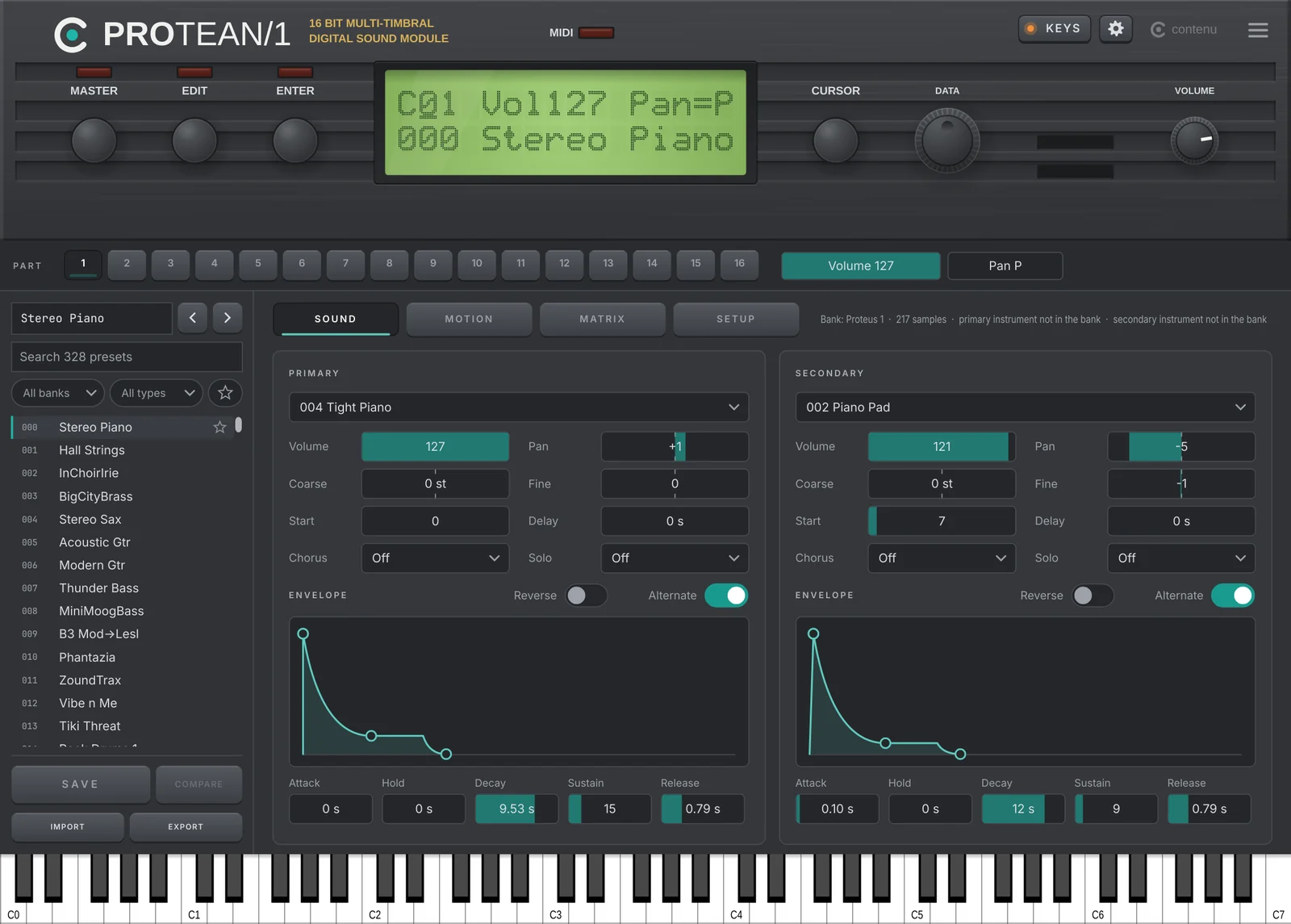
The front panel, and an editor beside it.
The front panel works like the hardware: four buttons, a data knob and a 2×16 display, with the full Edit and Master menus and even the factory diagnostics. Underneath sits a modern editor that shows the same preset as graphs, bars and menus. Both edit the same sound.
- 328 presets. The 128 factory presets and the 200 of the MPS set, searchable, with favourites.
- Sixteen parts and a mixer. Up to 128 voices, a main and two sub outputs.
- Authentic or clean. The hardware’s 39 kHz converter and output filter, or a cleaner sound.
- Your own samples. Point it once at your copy of the sound ROM, SoundFont or bank.
In development · VST3, AU, Standalone · Windows build in daily use
- Formats
- VST3, AU, Standalone
- Modelled from
- 68000 firmware, sound ROM, manuals and preset dumps
- Built with
- Claude Code, C++, JUCE 8
- Built
- Autumn 2026
- Version
- 0.0.1
- Availability
- Not yet released
How it was made
Firmware, sample decoders and a measuring bench.
I don’t read C++. Claude Code wrote all of it, and did the research with me. My part was the direction: which sources to trust, what to measure, what to build next, and when a build sounded right.
The firmware
A disassembled operating system
Claude Code disassembled the module’s 68000 program and mapped what it found: a voice service that runs about 53 times a second, the velocity curves, envelope steps, tunings and the sound chip’s volume law. The engine runs from those tables.
The samples
Decoding an undocumented bank format
The samples came from a later software sampler’s library, in a file format nobody documented. Claude Code wrote a set of decoders for its samples, zones and presets, and matched every layer against a SysEx dump of the hardware’s factory presets.
Measuring
Note by note against a reference
Purpose-built tools play the same test notes through a reference and through Protean, then compare level, attack, sustain, release, pitch and brightness for every note. Others track pitch in cents and envelopes in decibels, every 100 ms.
The next model
Written down to be repeated
The /2 and /3 models share the preset format, so the engine and both editors carry over. A porting guide records every step of this build: sources, matching the bank to the dump, the model file and the generated tables.
An independent model of a vintage instrument. Not affiliated with or endorsed by the original manufacturer. Product names are trademarks of their owners.
Contact
Questions, ideas or a conversation?
I’m always glad to hear from people working on AI, product strategy, transformation or software.